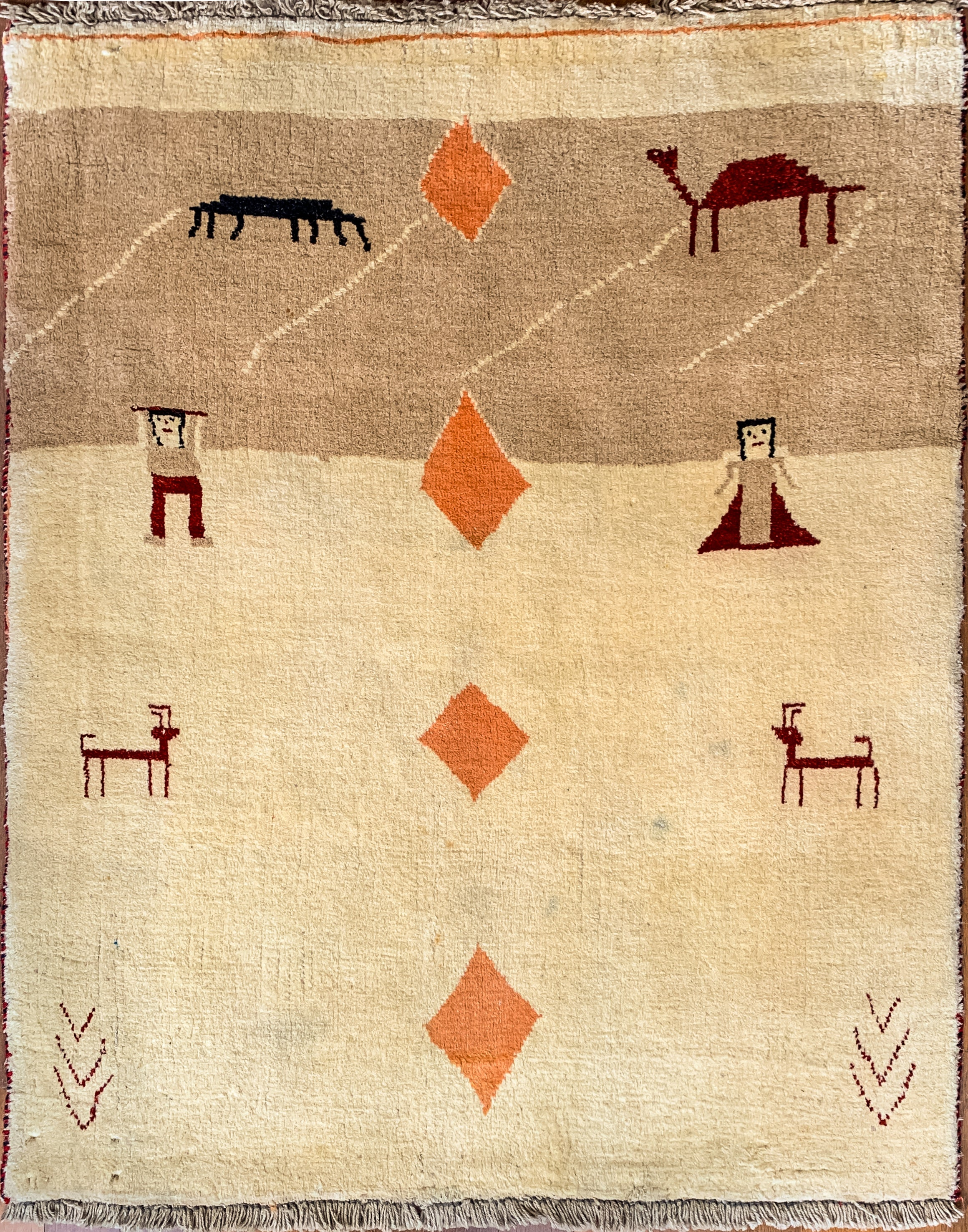
In the vast landscapes of Iran, where the earth stretches endlessly beneath an open sky, the Ashāyer (nomadic tribes) move with the rhythm of nature. They do not settle; they migrate. They weave their stories into fabric, crafting Gabbeh—simple, raw, essential. These textiles are more than just rugs; they are maps of movement, memory, and survival, woven by hands that have known both hardship and freedom.
I was drawn to the essence of Gabbeh—the purity of its patterns, the way it captures life in its most minimal, geometric form. The figures within these weaves—animals, people, symbols—are stripped down to their essence, reduced to lines and shapes, yet still breathing with spirit. They are not decorative; they are stories.
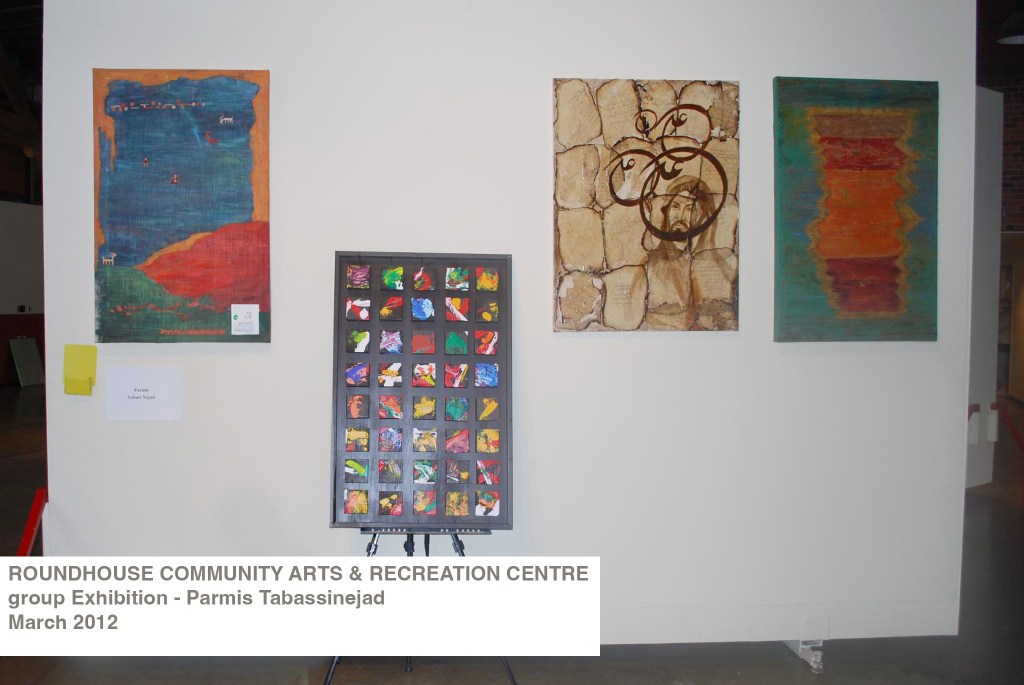
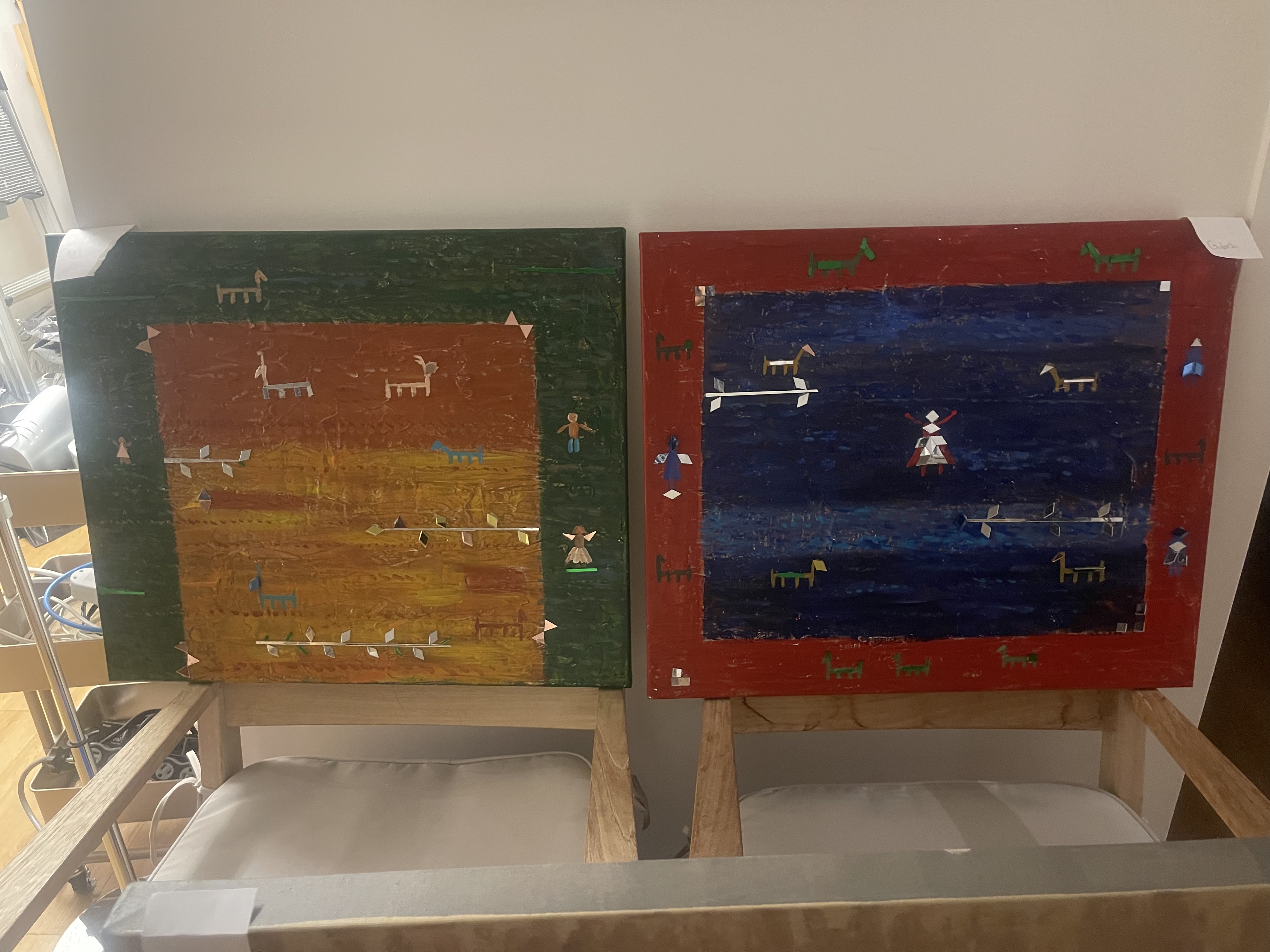
My relationship with Gabbeh began long before this collection. In 2011/2012, during a group exhibition, I presented four artworks, two of which were Gabbeh-based. At that time, I worked without mirrors—focusing purely on the texture, paint, and rawness of the weave. But over time, my exploration deepened. I felt that something was missing: the element of reflection. The people and animals woven into these textiles had always represented movement, transformation—so why not invite the viewer to become part of that journey?
(A photo from my 2011/2012 exhibition is included here, marking the beginning of my artistic exploration with Gabbeh.)
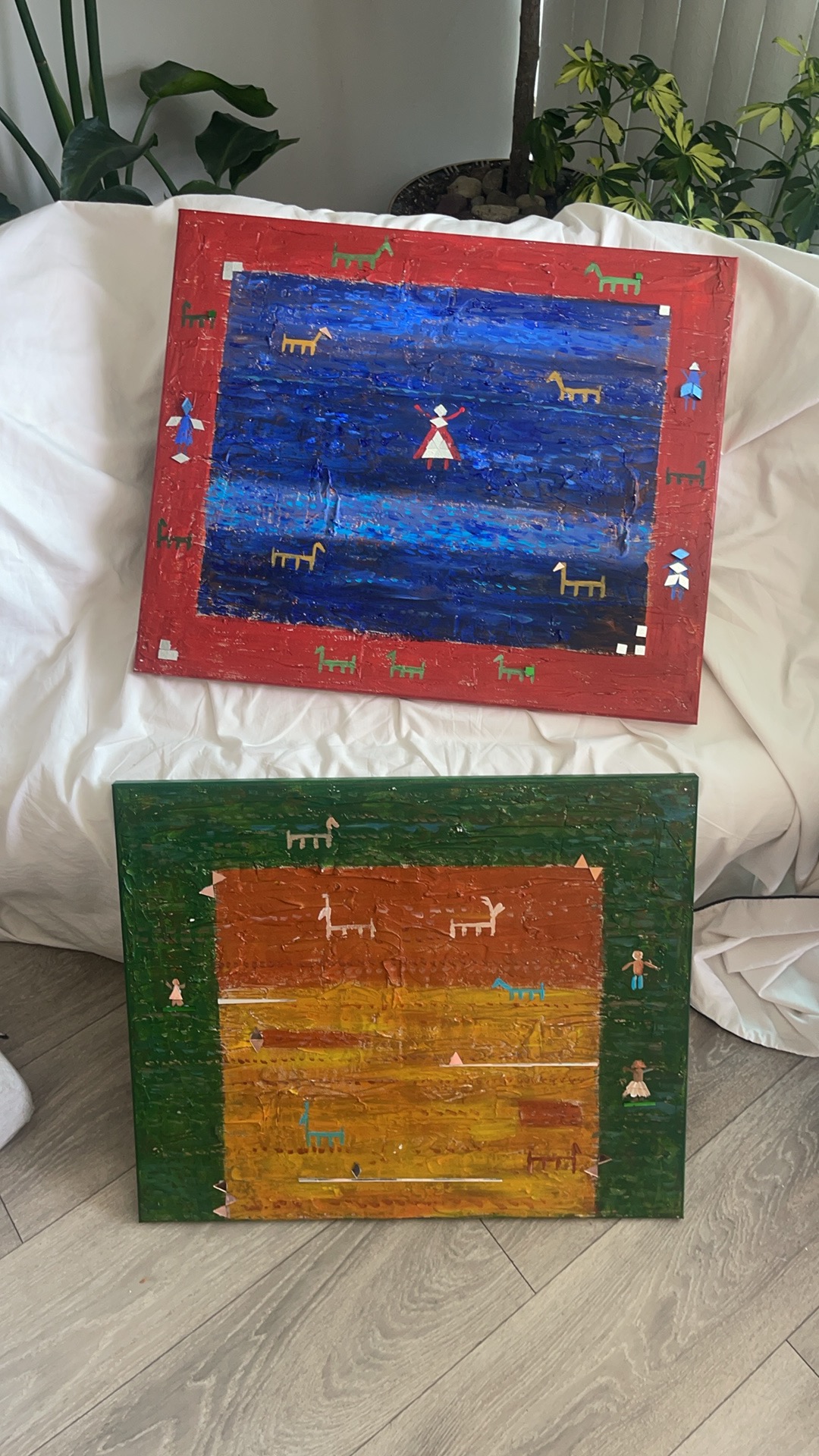
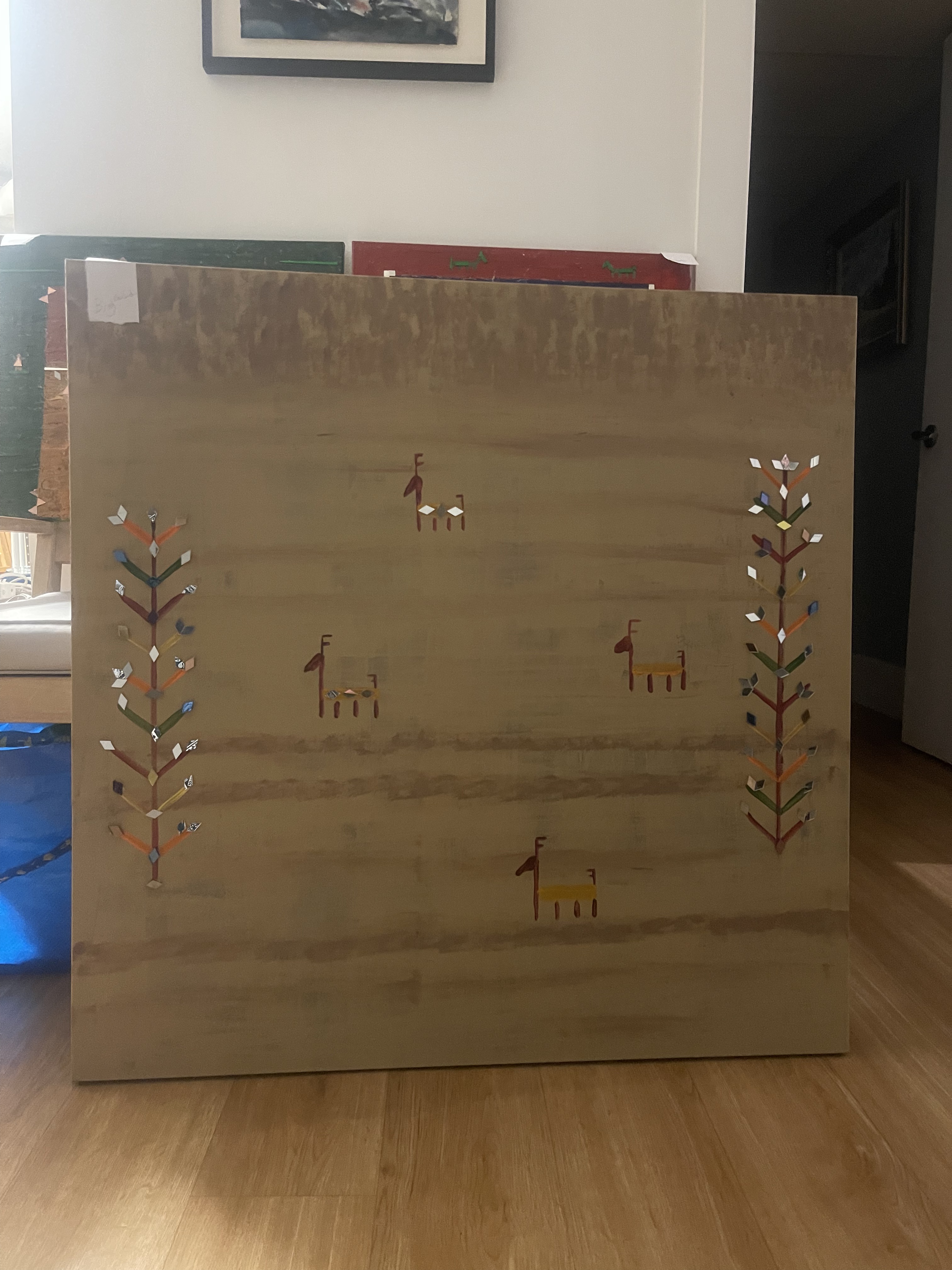
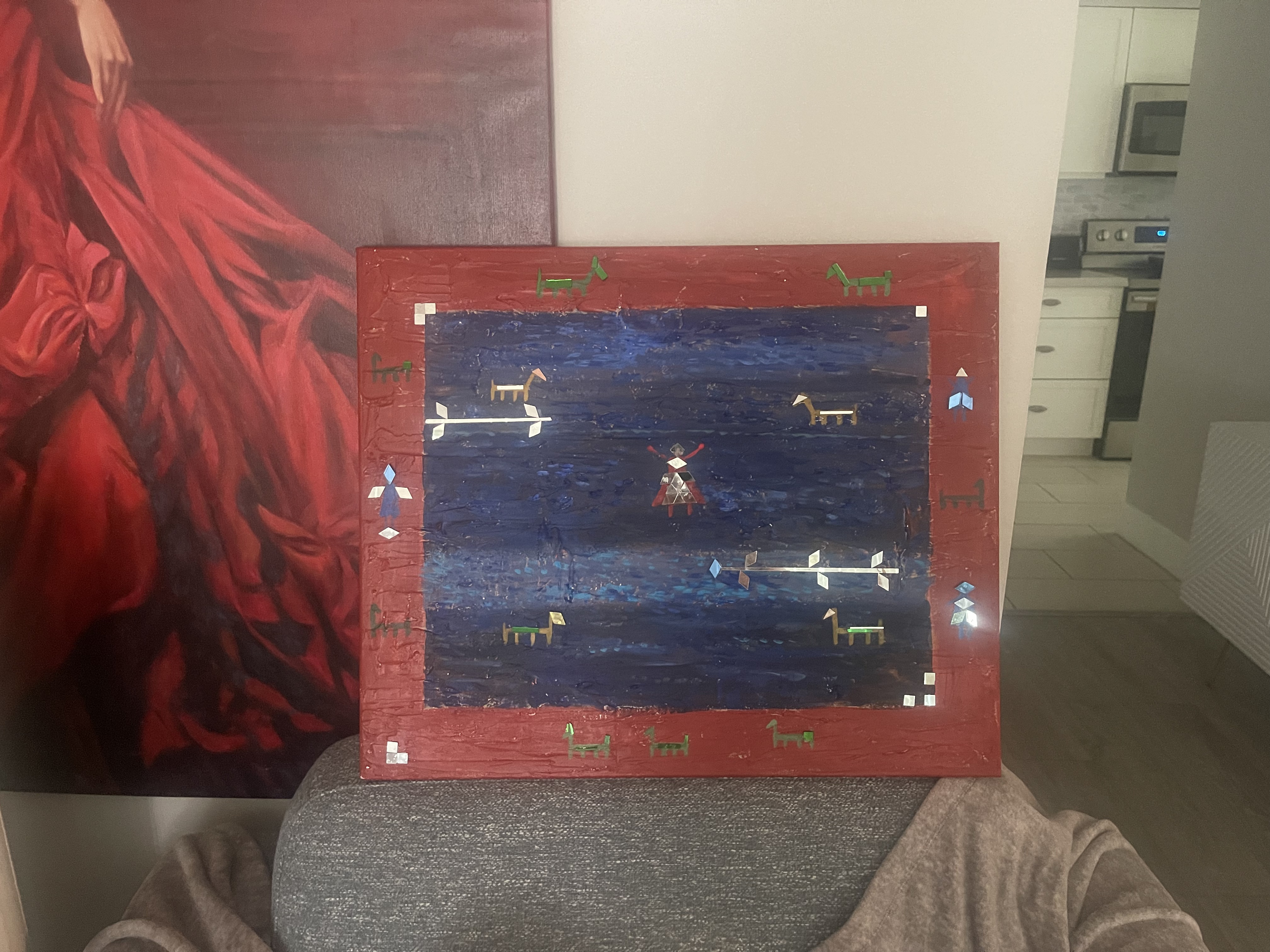
In my Gabbeh Collection, I revisit this traditional craft with a contemporary vision. I paint over the fabric, embedding layers of texture, merging past and present. And within the figures—the camels, the deer, the faceless nomads—I place mirrors. These mirrors are not just embellishments; they are windows. They ask the viewer to step in, to become part of the story, to see themselves within the migration, within the tradition, within the reflection of a culture that is always in motion.
Color plays a vital role in this collection. The earth tones of the original weave—ochre, deep red, indigo—speak of soil and sky, of sun and shadow. My textures disrupt yet honor them, blending contemporary intervention with ancestral craft. The mirrors, scattered across these woven landscapes, catch the light like fleeting moments, like the glint of the sun on desert sand, like a memory resurfacing.
This collection is not just about preserving the art of the nomads; it is about continuing their story. It is about movement—of people, of identity, of time.
The past is woven in. The present is reflected back. The journey continues.
 parmistabassinejad.com